MyEyeDr
In Q3 2020, MyEyeDr partnered with Carbon5 to redesign its patient intake and appointment booking experience. The engagement focused on modernizing a pre-existing, opaque scheduling system while improving patient confidence, operational efficiency, and conversion across intake flows. The scope centered on three primary themes: simplifying appointment booking, supporting intake document management, and introducing intuitive retail touchpoints where appropriate. The work required close collaboration with MyEyeDr’s designated Product Owner and careful navigation of an inherited system with limited visibility into user behavior and drop-off. The objective was to transform a fragmented, complaint-heavy intake experience into one that felt clear, trustworthy, and accessible, particularly for patients with varying levels of digital comfort.
CLIENT
MyEyeDr
DELIVERABLES
Personas Experience Mapping Competitive Analysis User Testing Propotying Design System High Fidelity Mocks
YEAR
2020
ROLE
Principal Product Designer
Definition Phase
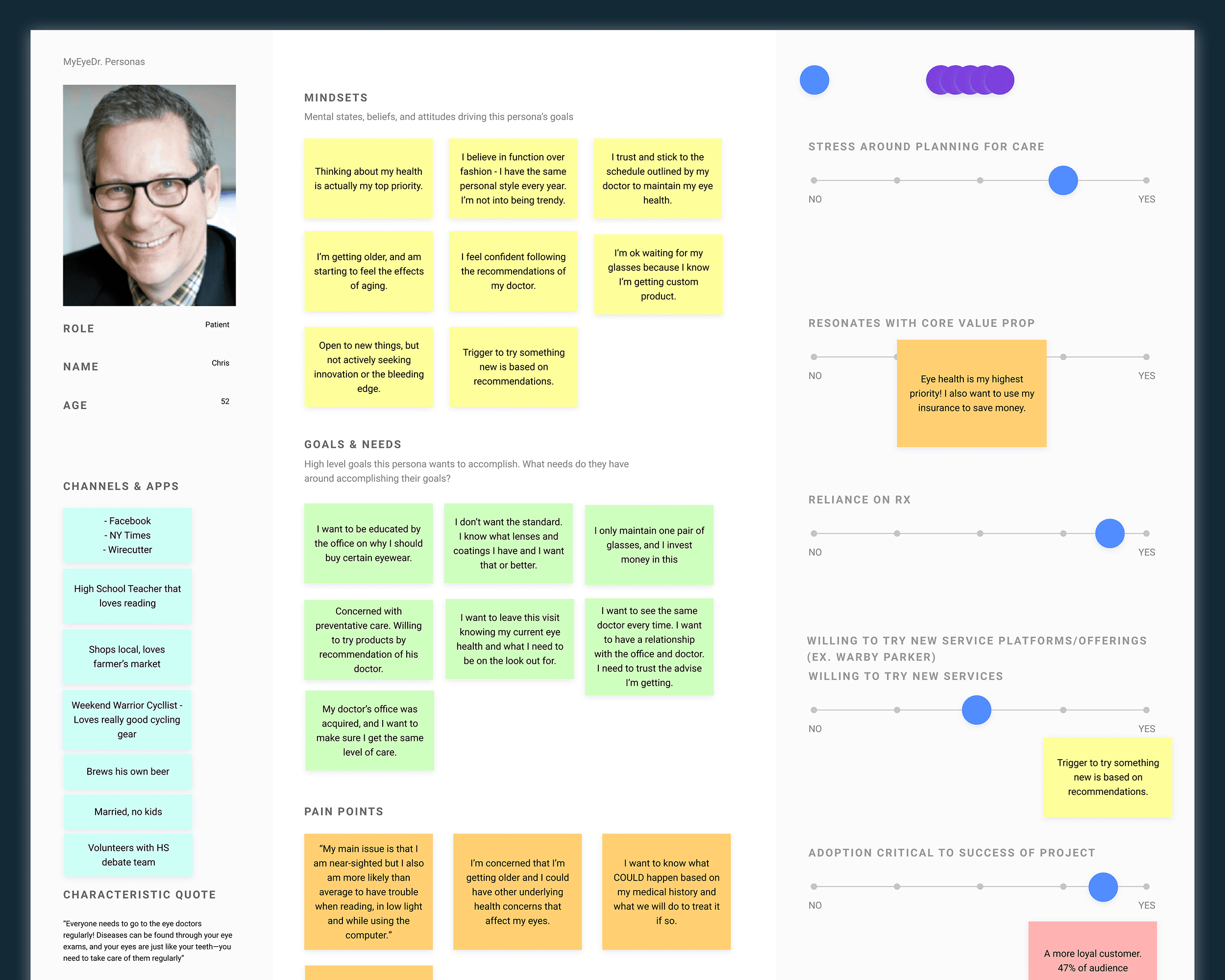
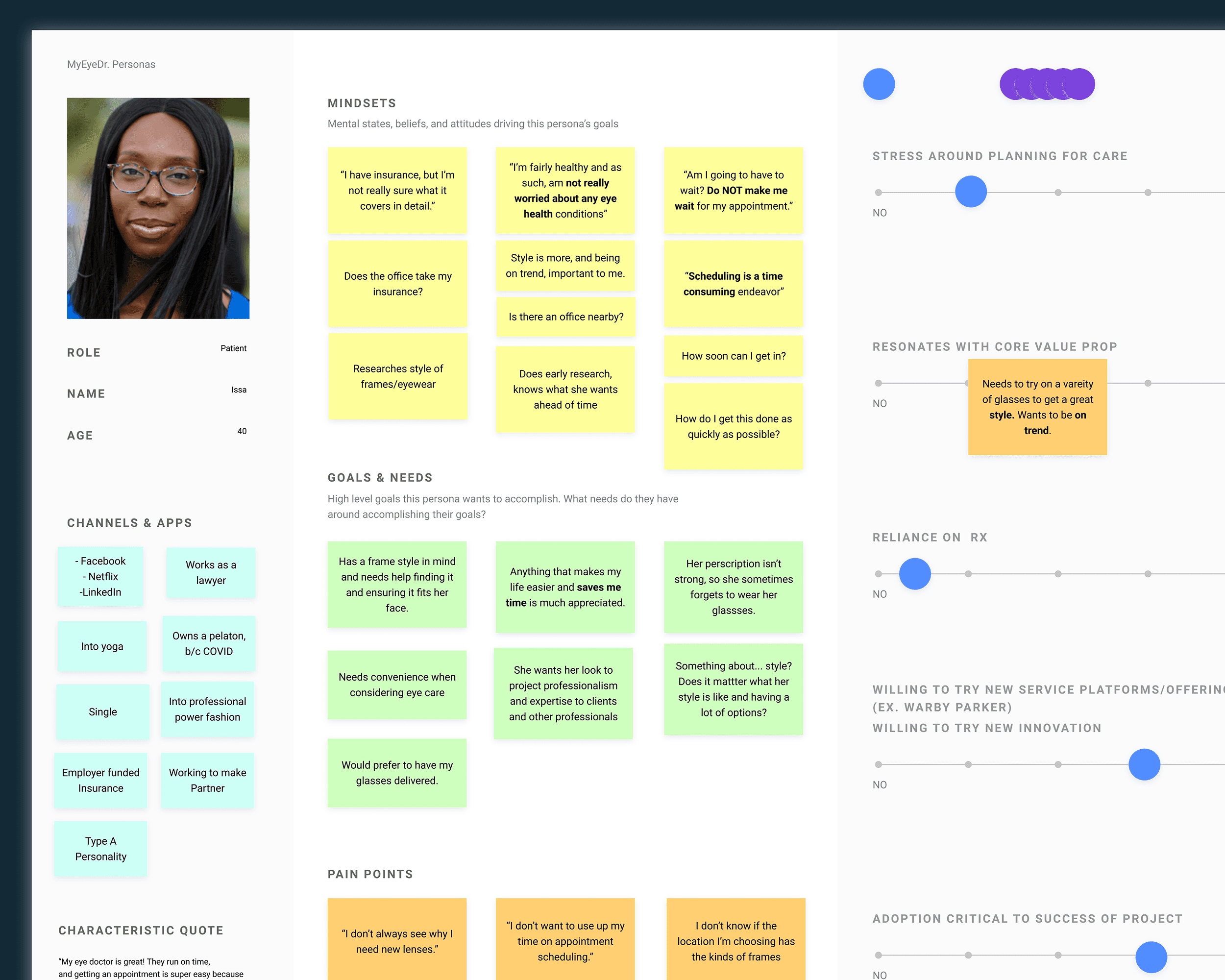
MyEyeDr entered the project with prior research conducted by McKinsey. While valuable, the findings skewed toward high-level marketing insights rather than actionable product behavior. These insights were restructured to support persona development and flow-level decision-making.
Early synthesis revealed that geriatric patients represented a critical user group with distinct accessibility and cognitive needs. While initial thinking spanned many market segments, the approach shifted toward designing for individuals rather than demographics, enabling more empathetic and effective solutions.
The existing marketing site relied on third-party scheduling software that functioned as a black box. The organization lacked visibility into where users dropped off, despite frequent patient complaints and internal inefficiencies. To address this, the current-state experience was documented end-to-end, combining heuristic evaluation with stakeholder interviews to surface friction points and systemic constraints.
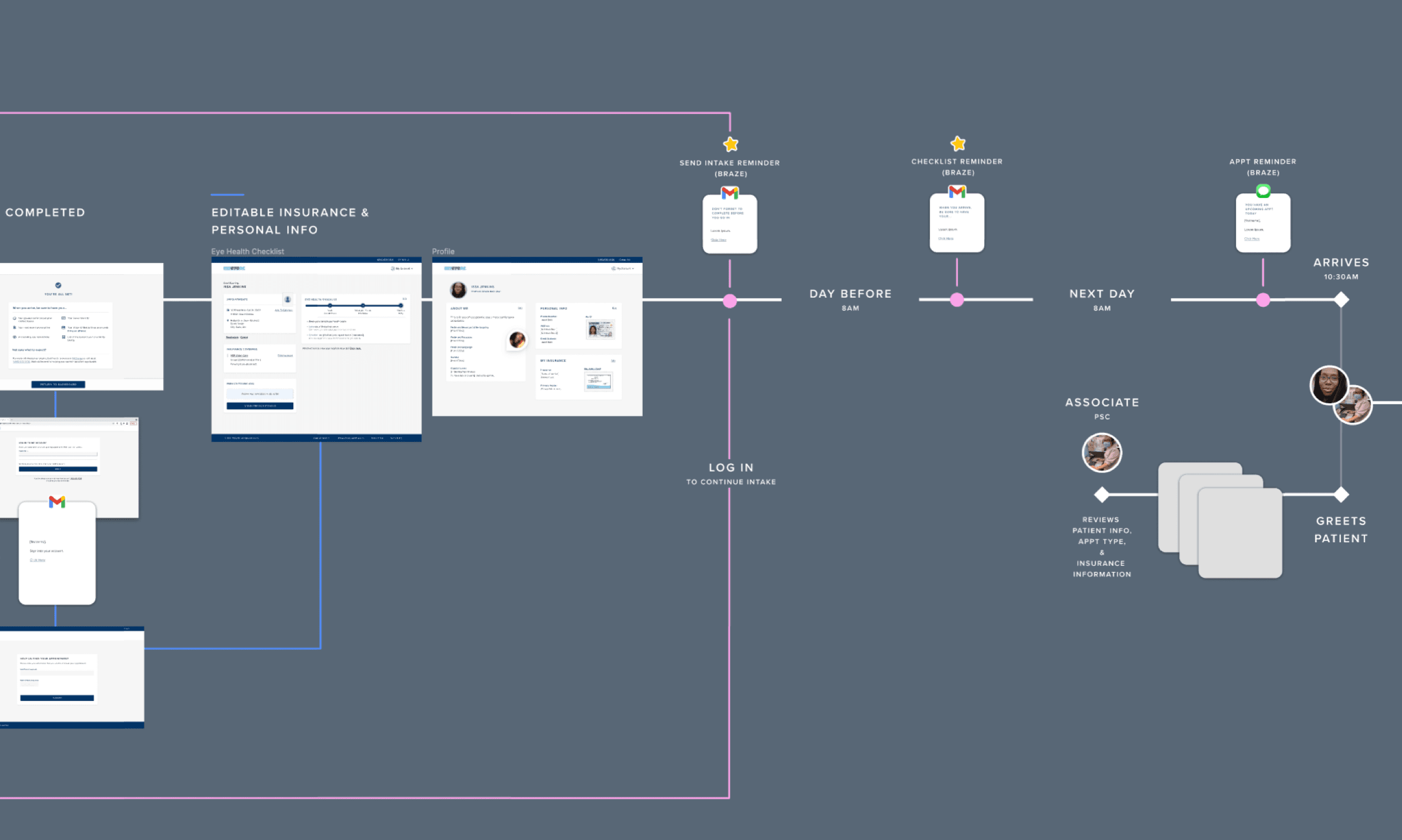
Experience mapping became a key tool. Appointment booking was mapped across digital, phone, and in-person channels, with usage distribution noted for each. This provided critical context for assessing where digital solutions could meaningfully reduce load versus where human intervention remained essential.
Initial Concepts
Early concepts focused on reducing cognitive load and improving confidence during booking:
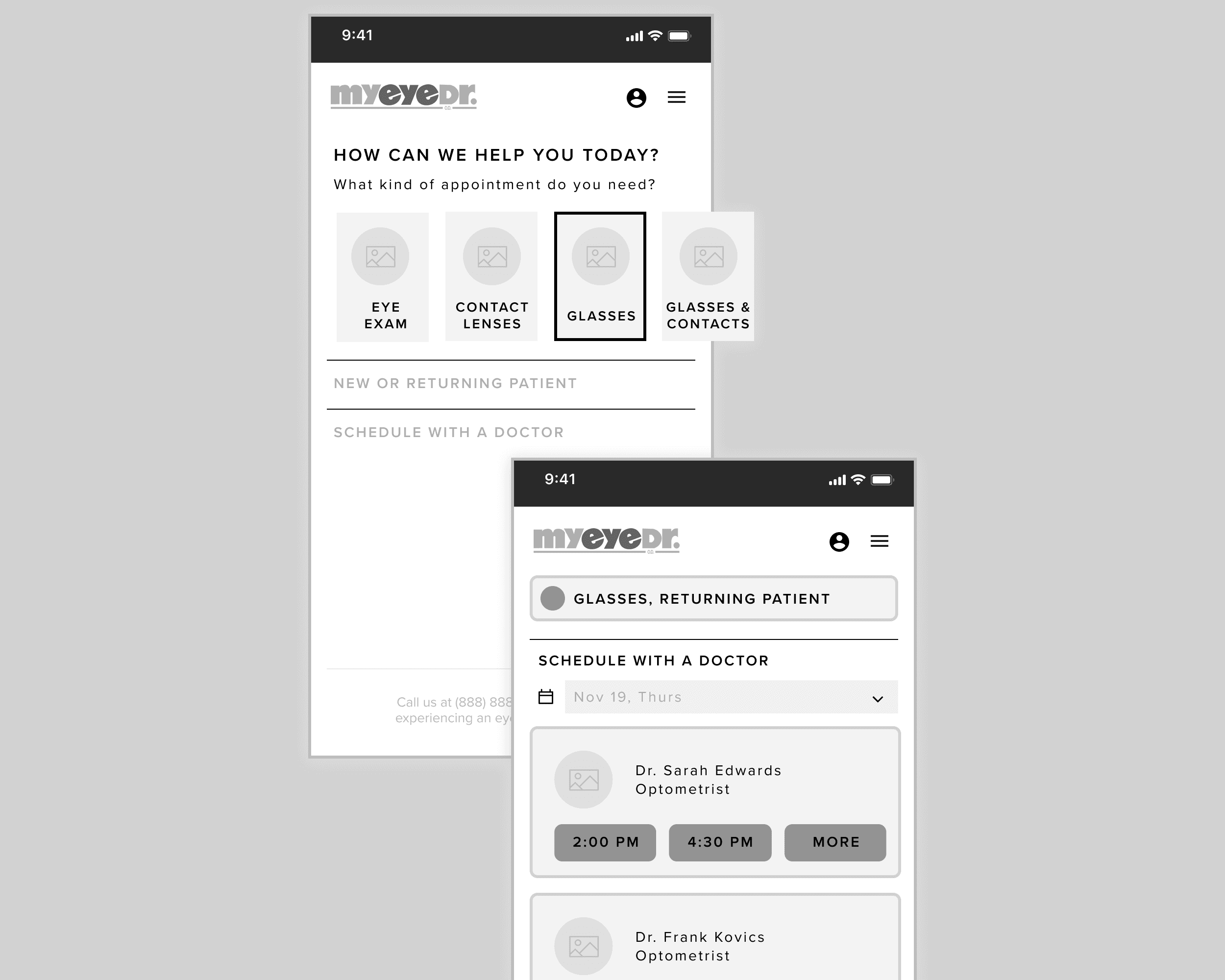
Power search with centralized results
Progressive refinement starting from a location-based query
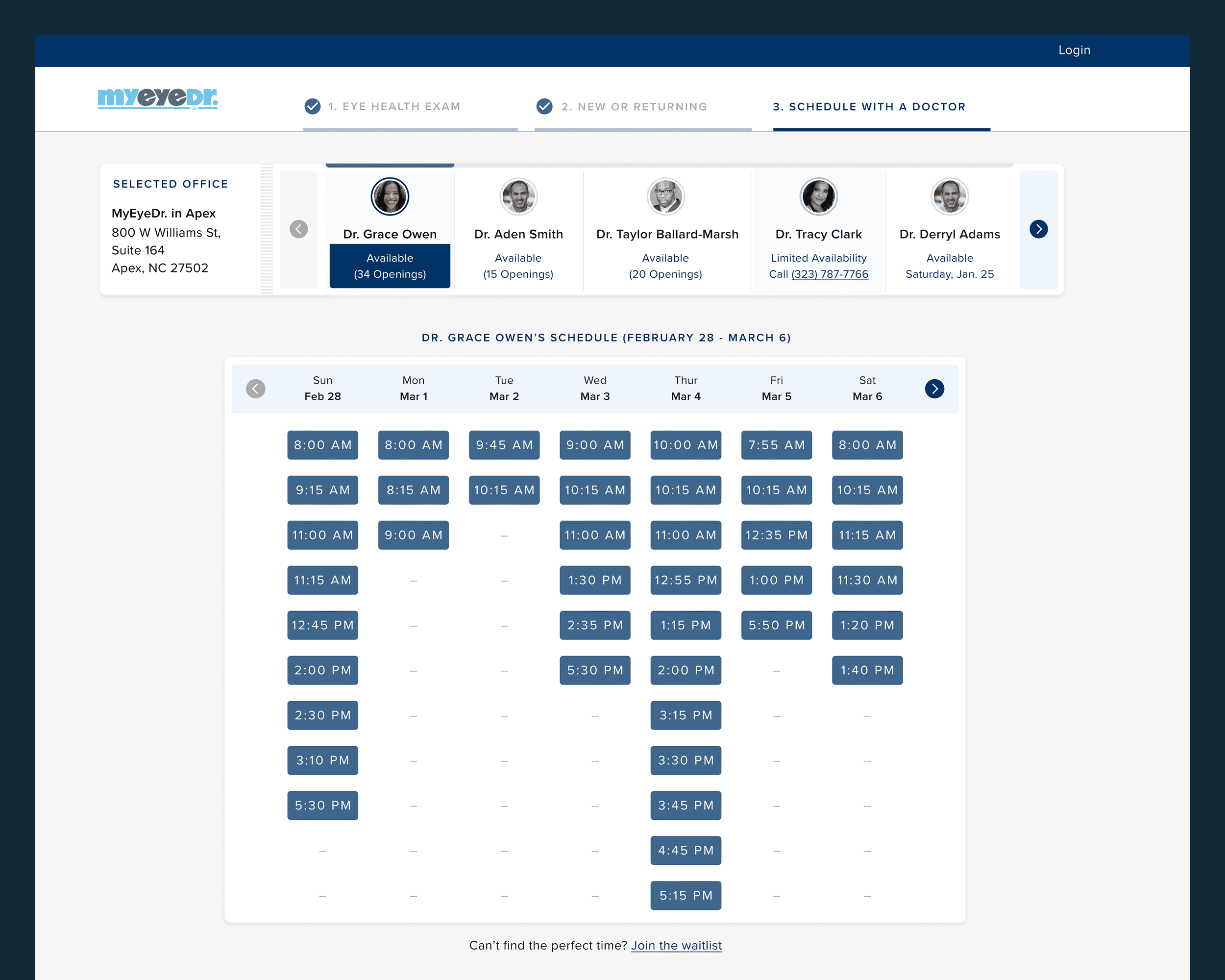
Guided, step-by-step booking to reduce overwhelm
Automated search results with clear defaults
Accordion-based flows to chunk information and maintain momentum
These concepts were intentionally designed to support users with lower technical confidence while remaining efficient for repeat patients.
Verifying Solutions
Solution development emphasized inclusive input across the intake ecosystem. Patients were surveyed and tested in iterative rounds, while Office Associates were included as first-class stakeholders to ensure operational realities were reflected in the design.
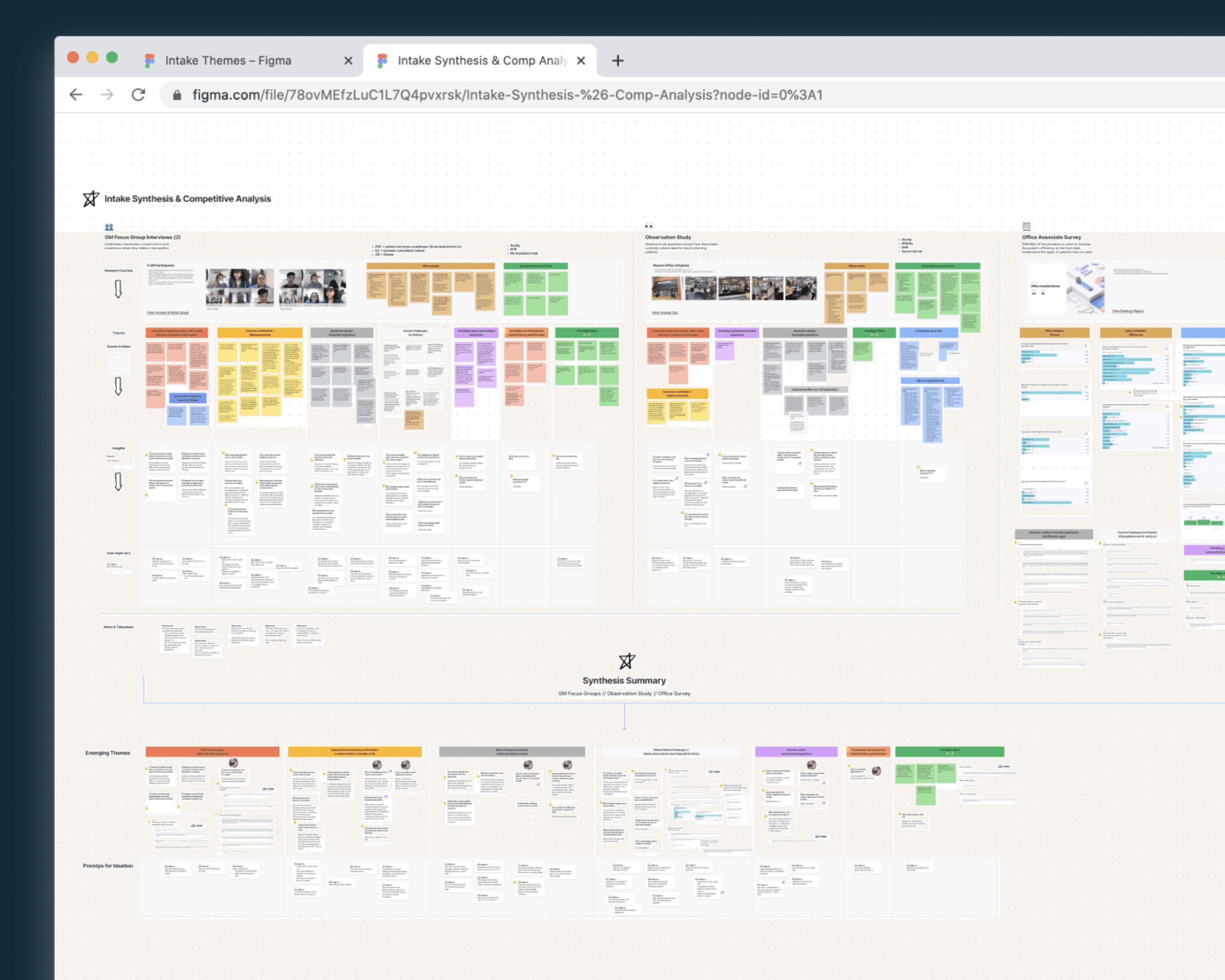
Insights were synthesized into thematic groupings with layered detail, allowing teams to zoom between strategy and execution. Competitive analysis was revisited periodically as the scope expanded to encompass the full intake experience, ensuring solutions remained aligned with both healthcare and retail expectations.
The resulting direction balanced automation with guidance, reduced uncertainty at key decision points, and aligned digital intake more closely with in-office workflows. The redesigned experience positioned MyEyeDr to better support aging patients, improve internal efficiency, and evolve intake flows without rebuilding the system from scratch.