Playboy
Playboy was in the midst of a pivotal digital transformation, shifting from a legacy print-first brand to a modern, editorial-forward digital platform. The challenge was twofold: preserve Playboy’s cultural equity while modernizing the experience, and improve e-commerce performance through UX-led strategy. The audience skewed male but spanned multiple generations, each engaging with the brand for different reasons. To bring clarity to this complexity, users were defined into three core types: The Reader, The Subscriber, and The Buyer. Each represented distinct motivations and engagement patterns that needed to be supported without fragmenting the experience. Early evaluation revealed that the most pressing usability issues centered on User Control and Freedom and Consistency and Standards. These gaps directly impacted discoverability, orientation, and conversion across editorial and commerce flows.
CLIENT
Playboy
DELIVERABLES
Product Design UI Design UX Strategy UX Research
YEAR
2020
ROLE
Product Designer
Defintion Phase
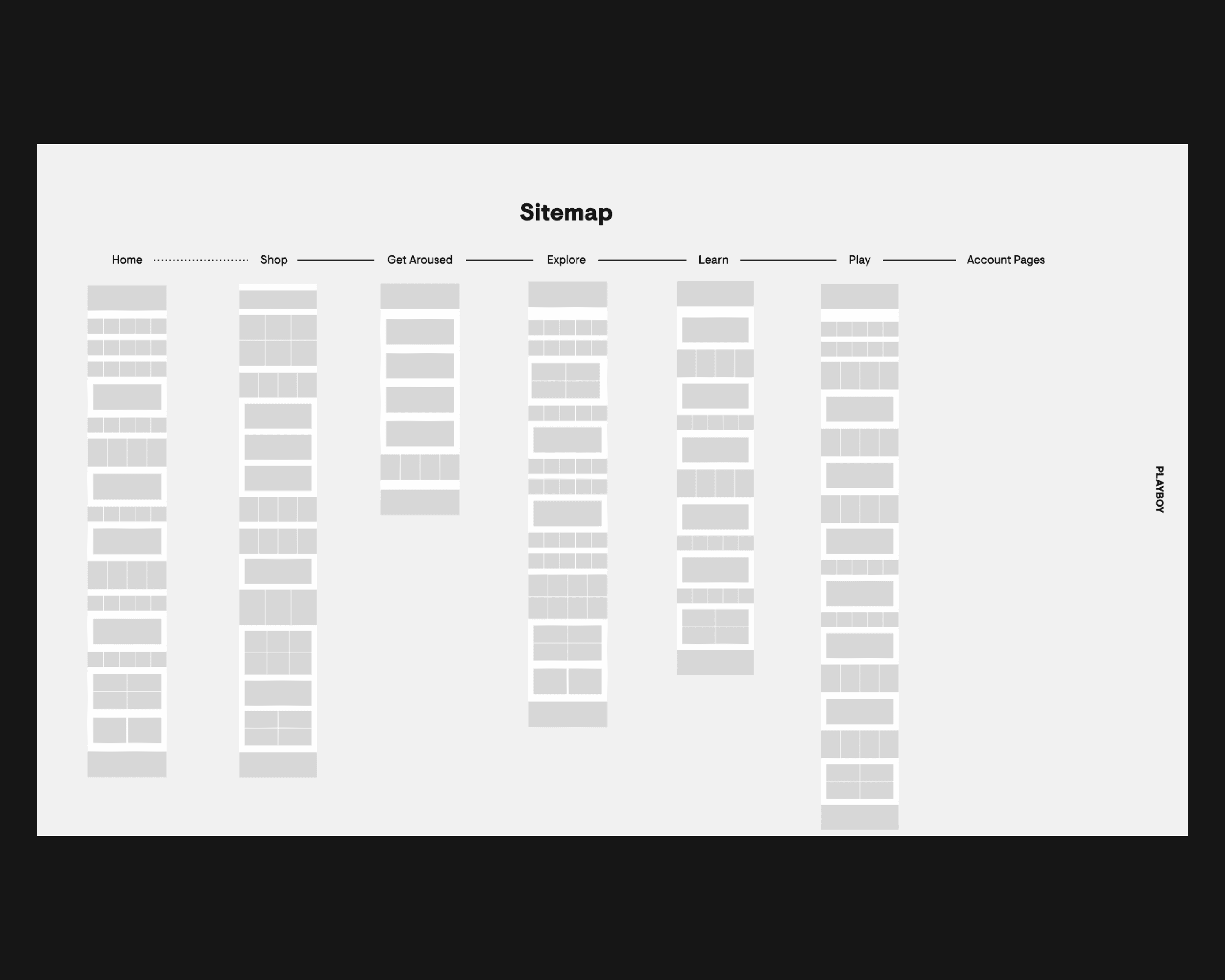
A heuristic evaluation surfaced a critical issue: visual fatigue driven by dense page layouts. The site relied heavily on rows of carousels and oversized imagery, resulting in frequent skeleton loading states and disorientation. Pages blended together visually, making it difficult for users to understand where they were or how they arrived there.
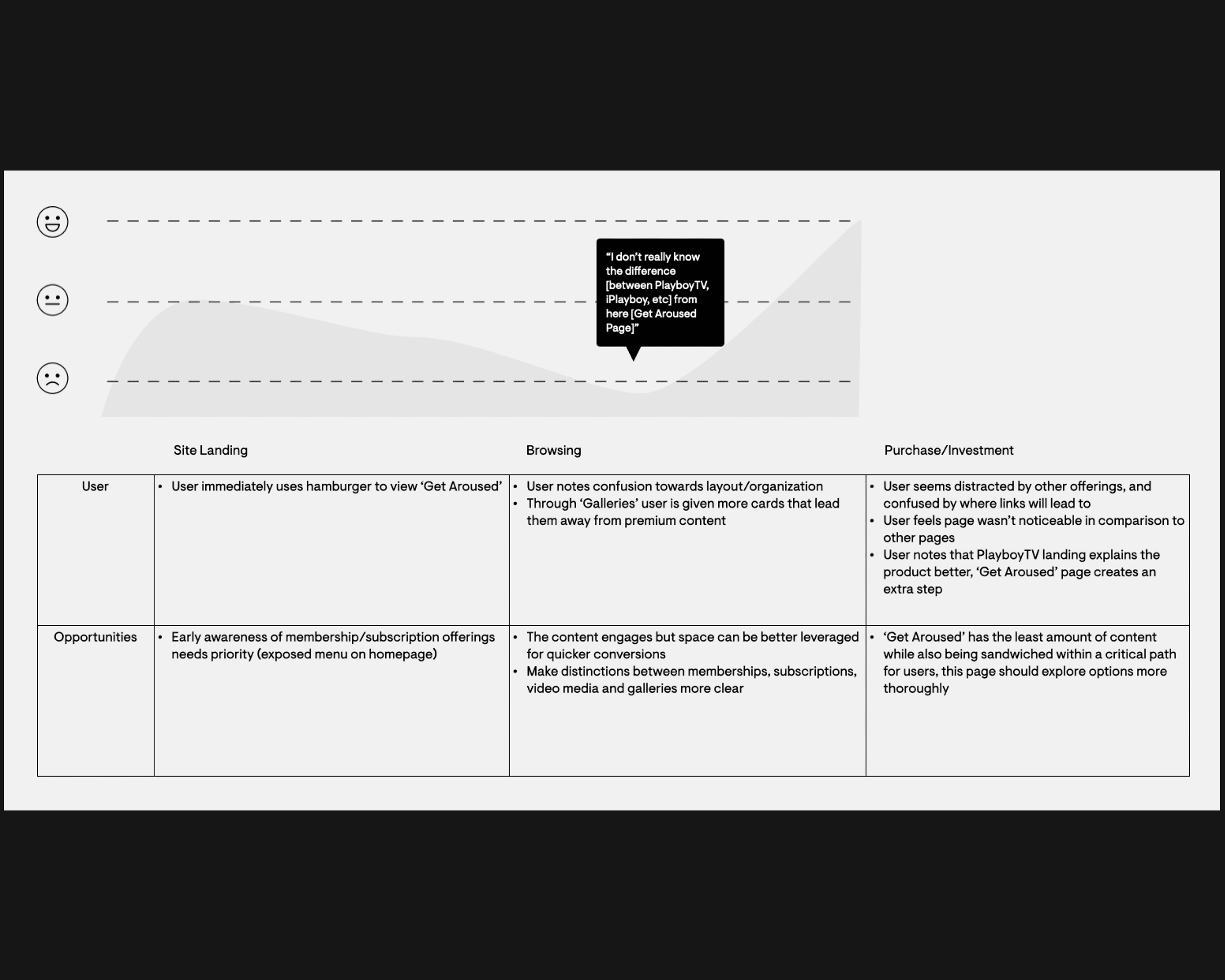
User testing reinforced these findings. Multiple participants described landing on visually striking pages but lacking a sense of navigation, context, or progression. The experience felt beautiful but ungrounded.
To address this, early concepts focused on restoring structure and intent:
Establishing consistency across rows by aligning them to a single topic, function, or goal
Creating a clear labeling and styling system for content cards based on purpose
Rebuilding content hierarchy to better signal priority and progression
Additional opportunities were explored to increase engagement and clarity:
Making sharing options more visible and intentional
Introducing interactive editorial elements aligned with Playboy’s voice
Strengthening temporal awareness across the site through story-based or event-based framing
Elevating recurring features, such as “Sex Word of the Day,” to reinforce rhythm and return behavior
Verifying Solutions
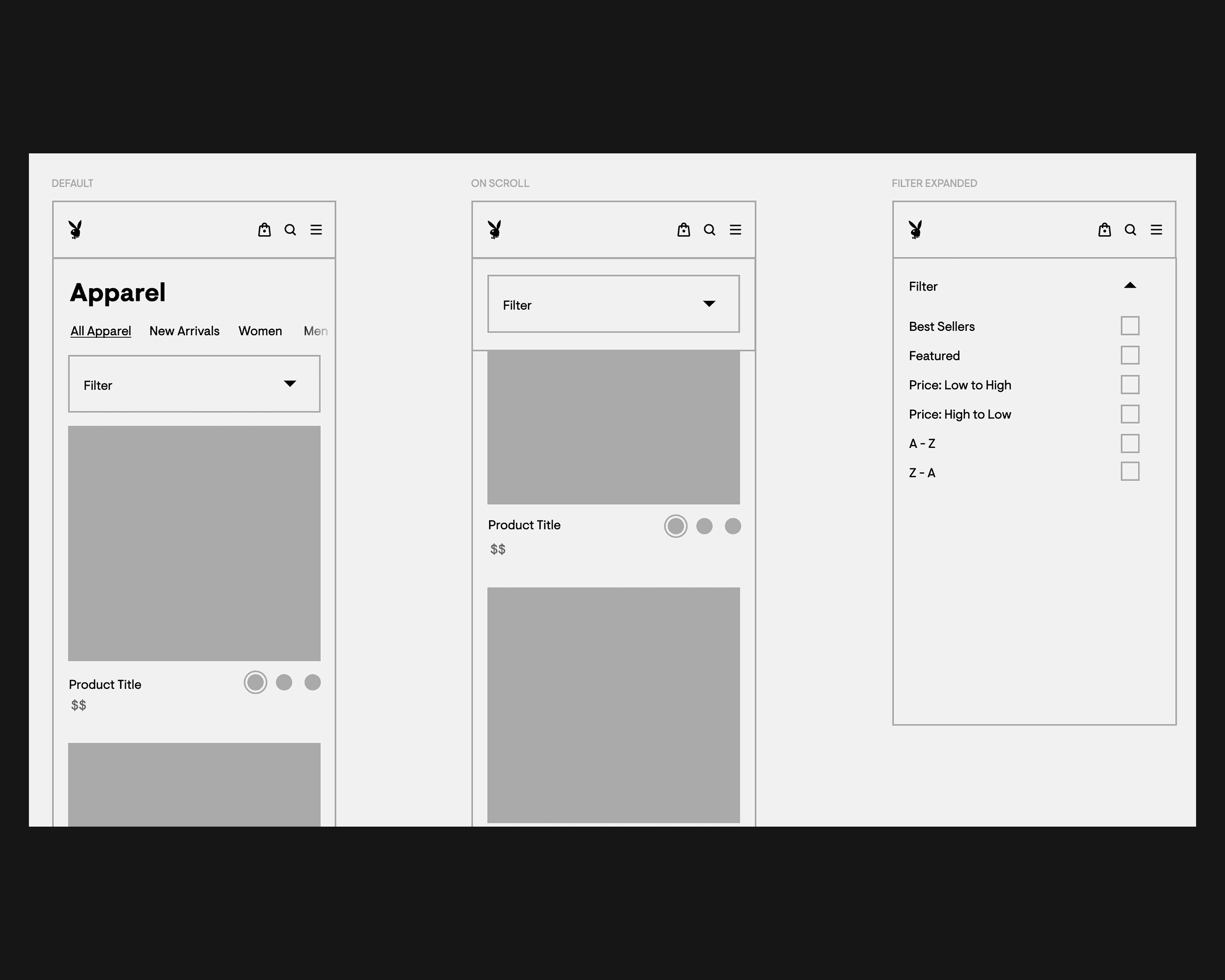
The solution centered on restructuring user flows through clearer content hubs and shortening long, fatiguing pages to reduce analysis paralysis. Stakeholder interviews with members of Playboy’s editorial team proved especially valuable, grounding design decisions in real publishing workflows during the brand’s transition from print to digital.
Extensive qualitative testing helped validate reading, subscribing, and purchasing flows, with particular attention paid to building trust and clarity across each user type. This process led to a collaborative reduction of distracting or redundant content in favor of a more focused editorial experience.
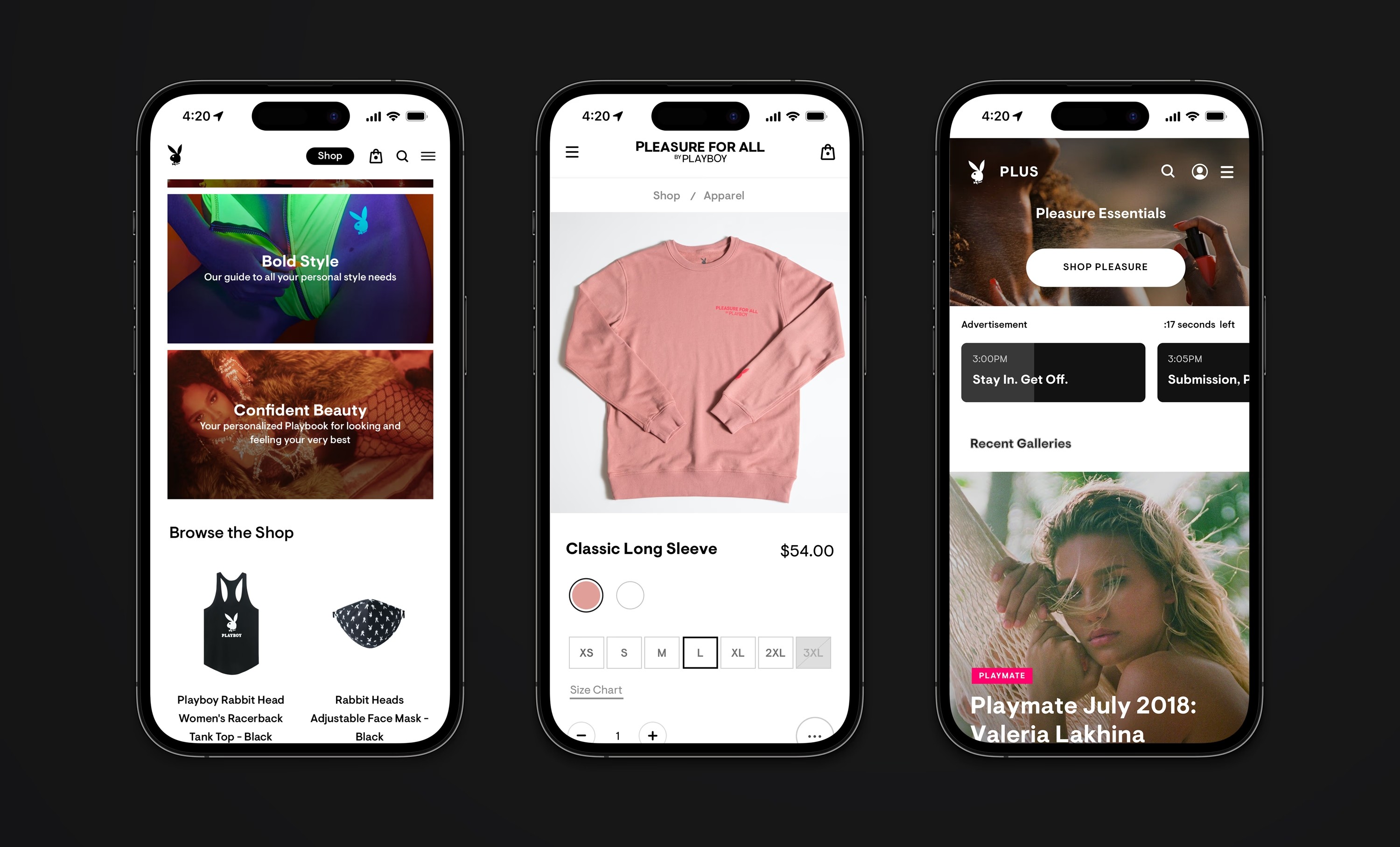
The final outcome delivered faster page loads, a refined information hierarchy, and improved navigational clarity. These changes strengthened SEO performance, supported smoother commerce interactions, and helped reposition Playboy’s digital presence as intentional, modern, and editorially confident.